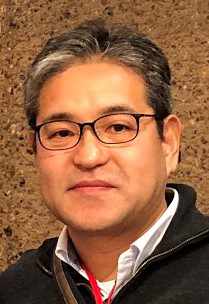
For Dr. Tsutomu Suzuki, a Professor in the Department of Chemistry and Biotechnology at the University of Tokyo, Japan, the path toward science, and later RNA research, was paved early in his childhood while exploring mountains and fields with his father, a high school science teacher. These activities cultivated in Dr. Suzuki a sense of discovery that was further sparked during a university lecture on the central dogma of molecular biology, when he realized that although RNA is a major component of ribosomes, its role was not understood. Soon after this realization, he joined Prof. Kimitsuna Watanabe’s laboratory as an undergraduate student, and from that moment he has “devoted [his] research career to the study of tRNA and ribosomes”.
Today, Prof. Tom Suzuki’s research centers on RNA biochemistry, especially on the biogenesis and function of RNA modifications and the molecular mechanisms of protein synthesis. His group has developed platform technologies for isolating individual RNAs and for highly sensitive analysis of RNA modifications by mass spectrometry. They have discovered several novel modifications and dozens of RNA-modifying enzymes. His group also reported the first instance of a human mitochondrial disease caused by a disrupted tRNA modification and is now studying the molecular pathogenesis of this condition. He considers this discovery the most significant highlight of his career so far: “Pathogenic mutations in tRNA lead to defective tRNA modifications, which in turn serve as a primary cause of disease onset. This finding expanded the conceptual framework of human diseases, which we call ‘RNA modopathy’ or ‘tRNA modopathy.’ Moreover, since then, many other disorders have been shown to result from aberrant tRNA modifications, and I believe our work has made a meaningful contribution to the development of this field.”
After dedicating his career to studying tRNA modifications, Prof. Suzuki acknowledges that the functions of many modifications located in the body of tRNAs remain unknown, and that the biggest challenge in the field is connecting biochemical insights with their physiological functions. In the coming years, he aims to focus his research on these unanswered questions to narrow this critical knowledge gap. So far, his research team has assembled a comprehensive map of all tRNA modifications using mass spectrometry, but he believes that Nanopore technology will allow for much more accessible analysis. He is very excited about the possibility of capturing the dynamics of these modifications: “Given the enormous amount of information carried by tRNA modifications, being able to capture their dynamic changes across different biological contexts, particularly in human diseases, could open the door to new breakthroughs.”
“By combining classical biochemical approaches with state-of-the-art analytical technologies, I believe we can achieve major breakthroughs. I strongly encourage young researchers not to limit themselves to what seems readily feasible, but to embrace classical methodologies and take on difficult challenges with courage.”
Despite being a successful scientist and now a professor, Dr. Suzuki’s path to this position was rather unconventional. After his PhD, he joined a pharmaceutical company and never conducted research as a postdoctoral fellow. While grateful for the industrial experience, he admits that if he could change something in his career path, he would have pursued a postdoc at an international institution, as he believes this would not only have improved his language skills but also shaped the way he thinks about research. However, the scientific imprint of his PhD mentor Prof. Kimitsuna Watanabe, who guided him through critical moments and offered timely, insightful advice when it was most needed, together with his work experience as a staff scientist in Watanabe’s lab, provided an invaluable foundation for his career. This experience has profoundly shaped Dr. Suzuki’s scientific mindset and methodological rigor that continue to define his work today. This foundation was further strengthened by the supportive scientific community in Japan.
He is deeply grateful to the RNA community in Japan, which organizes the annual RNA Society of Japan meeting and other group grants that have enabled deep scientific exchange and strong cooperative relationships. “We praise good research, offer constructive criticism when ideas are not good, and share advice freely. In doing so, we foster an environment where we can learn from and support each other. At the same time, the community tends to remain somewhat domestic, so I hope that the younger generation will actively participate in the RNA Society and international conferences to strengthen their global presence.” The most cherished gift that the Japanese RNA community has offered him is the unique perspective and methodologies in RNA research developed by his predecessors, tools he still applies in his research today. His hope for the future is that this legacy will be inherited and carried forward by young researchers, as he strongly believes that young scientists should not shy away from traditional biochemical methods (such as chromatography) that equip them with the expertise to purify tRNAs and enzymes. “When it comes to discovering novel RNA modifications or addressing cases where genes cannot be identified through comparative genomics, classical biochemistry [is an] extremely powerful [toolbox]. By combining classical biochemical approaches with state-of-the-art analytical technologies, I believe we can achieve major breakthroughs. I strongly encourage young researchers not to limit themselves only to what seems readily feasible, but to embrace classical methodologies as well and take on difficult challenges with courage.”
His favorite RNA is tRNA, a classical RNA molecule, “yet so much about it remains unknown, and [I continue] to be endlessly fascinated by it.” This fascination has been with him since his first research project, in which he aimed to characterize the mechanism of genetic code alteration in Candida yeast, which can reassign the CUG codon (normally Leu) to encode Ser. This project was defining for his career not only because he demonstrated that in Candida yeast the CUG codon can simultaneously specify both Ser and Leu, leading to the proposal of the concept of a “dual assignment” or “polysemous codon”, but also because he realized that tRNA modifications play a crucial role in determining amino acid acceptance. He admits: “While there were many more attractive areas of research available, I found myself most excited by the insights I gained through my own experiments at the bench. It was then that I began to dream of devoting my career to this field, imagining how fulfilling it would be to make it my life’s work.”
His favorite paper published in RNA is one by his friend Anders Byström: “an outstanding study that, through the power of yeast genetics, comprehensively identified a series of genes responsible for tRNA modification. There is no doubt that this work opened up the field.”
You can contact Prof. Tsutomu Suzuki by emailing him at [email protected].