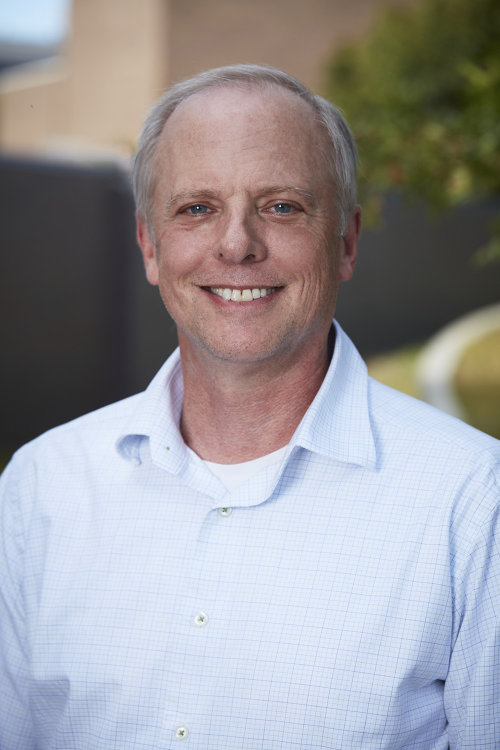
Dr. Jeffrey Kieft, Executive Director of the New York Structural Biology Center, tends to stray off the beaten path when it comes to choosing an RNA-related problem to tackle. From the beginning, Dr. Kieft was drawn to “RNA-centric questions and projects that are a bit off the radar of most people. I love the idea of working on a fascinating system or problem that most people are not paying attention to, or an aspect of a biological process that people are not thinking about.” Thus, the Kieft lab has always been interested in RNA structure-function relationships, and how these inform diverse biological processes, whether by investigating the mechanisms viral RNAs use to exploit host machinery or developing improved methods for solving complex RNA.
The path that led him to these RNA-centric questions began early in his career. Following an undergraduate degree in Chemistry at West Point (New York, USA), Dr. Kieft initially thought he wanted to study protein folding until a discussion with his future PhD supervisor, Dr. Nacho Tinoco, opened his eyes to the world of RNA. “He told me that RNA could also form 3D structures and showed me secondary structures of catalytic RNAs such as the group I intron. This was the first time I was exposed to the variety of functions RNA could possess, and that these could come from complex structures. He told me that no one knew what complex folded RNAs looked like, it was a mystery. I was hooked, so I decided to study RNA structure.” Dr. Kieft followed his interest in RNA structure to a postdoctoral position with Dr. Jennifer Doudna, where he added biochemistry and x-ray crystallography to his structural toolkit. He recalls, “Jennifer Doudna had just published the structure of the P4-P6 domain and I was truly transfixed by it—the complexity of the structure, the elegance of the interactions and the interplay of metal ions in the core. I read that paper and knew I wanted to work on things like that. Years later, I still get excited about every new RNA structure!”
“I have found inspiration from so many people, and in so many ways. I have been lucky to have great people around me—fellow post-docs and graduate students, colleagues, mentors, and of course the people that have worked for me. They inspire in small ways and big.”
Although Dr. Kieft has long been well-versed in the twists and turns of RNA structure, he also acknowledges the difficulties he faced as a trainee. “I failed my oral comprehensive exam in graduate school the first time I took it, and I had to do it a second time. Maybe I was overconfident, or prepared poorly, but I bombed it. I gave myself a day to be upset, and then just had to get back to work doing experiments and preparing to take the exam again.” During that moment, and other challenging times such as grant and paper rejections or periods of tight funding, Dr. Kieft worked to view the situation as a learning experience. “I always tried to take such times and turn them around to find the opportunities hidden in the challenge, and just keep working.” Recognizing that challenges and setbacks are an inherent part of science, Dr. Kieft recommends that trainees, “Study what excites you and what interests you. Find questions that you can’t wait to know the answer to, then go after them. Focus on what excites you because science is hard and if you are not interested in what you are doing, it goes from hard to painful.” Similarly, he urges trainees to think carefully about their choice of mentor. “Choose someone that you look up to, that treats you fairly, that you think cares about your success. That person’s lab is likely to reflect them, and so a good mentor will tend to create a place where you will be surrounded by people that you like working with.”
Mentorship is central to Dr. Kieft’s scientific philosophy and this perspective comes from his own experiences. Dr. Kieft is quick to credit his mentors, colleagues, and trainees for his successes in and out of the lab, and emphasizes the importance of recognizing the contributions of others and being part of a strong community. “Times in graduate school and as a postdoc were special, because I worked with and made friends with people that I didn’t realize were going to be colleagues for decades after,” he shares. “And one thing that has been far more rewarding than I would have guessed when I started my own lab is mentoring the many people that have come through my lab. I have so many memories of fun times with people in my lab, and when I see them succeed after they leave my lab, it is just such an incredible feeling.” One of his most cherished early mentoring memories is tied to why he enjoys the annual RNA Society meetings so much. “Soon after I started my own lab in Colorado and I had 3 or so people in the lab, we all went to an RNA Society meeting in Banff together,” he remembers. “It was a much smaller meeting then, and it was the first time I went with “my lab” rather than as a postdoc. I felt like I had “arrived” as a scientist, that I had a community, and that I might actually be able to make this whole academic lab thing work!” RNA Society meetings have also been great places to meet future colleagues and trainees. “I have also had the good fortune of meeting people at RNA Society meetings that later would join my lab as postdocs. I won’t embarrass anyone, but I remember my first interactions with people there that would turn into long professional and personal relationships, which are fond memories.”
In addition to annual meetings, Dr. Kieft is also grateful to the RNA Society for establishing the RNA Journal. “I hope Society members appreciate the value of having “our own” journal, edited by our peers, publishing great science. The biomedical publishing landscape has a lot of problems right now, to be honest, which I won’t get into. A journal like RNA is an important part of the antidote.” His favorite RNA article is “the one I am writing right now!” so keep an eye out for more from the Kieft lab in a future issue of RNA.
Dr. Kieft’s favorite RNA is “a secret!” but he is always happy to talk about RNA, especially if there are structures involved. You can find him on his lab website, kieftlab.org, or catch up with him at future RNA Society meetings.